
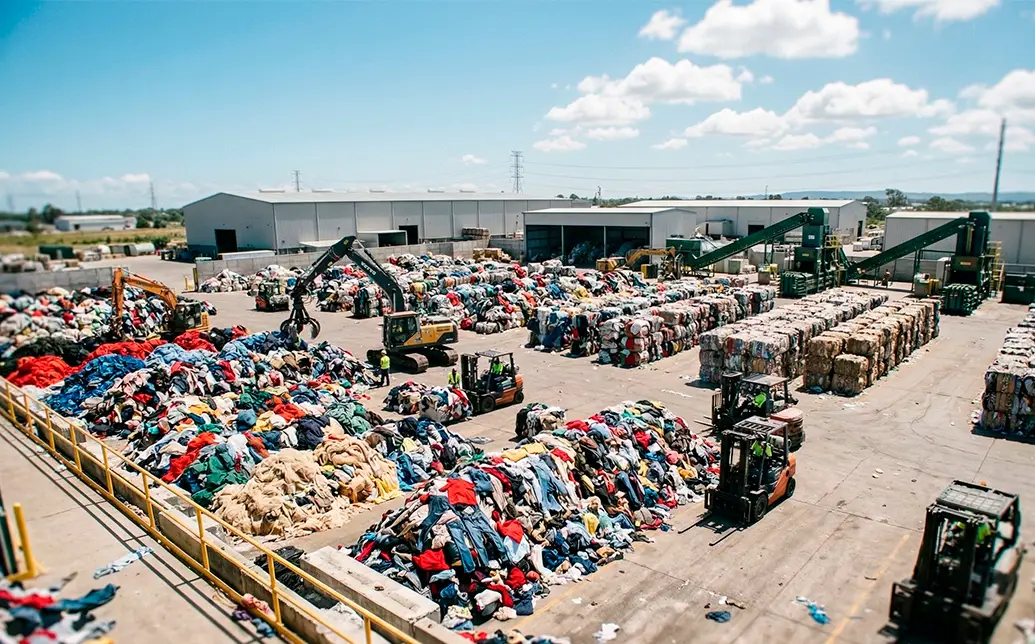
In an era of hyper-consumption, the fashion industry has emerged as one of the most significant threats to our planet’s health. At Givecycle, we believe change isn’t fueled by guilt, but by strategic action and technology applied to the circular economy. Textile recycling is no longer a niche “green” habit; it is a critical necessity for preserving our natural resources and mitigating the climate crisis.
This article explores the tangible environmental benefits of recycling your textiles and how the Givecycle model transforms the simple act of decluttering into a global engine for positive impact.
The Global Scale of Textile Waste
To appreciate the benefits of recycling, we must first understand the magnitude of the problem. According to the U.S. Environmental Protection Agency (EPA), textile waste generation has skyrocketed over the last few decades. In 2018 alone, approximately 17 million tons of textiles were generated in the U.S., but only 14.7% were recycled.
The remaining millions of tons end up in landfills or incinerators, where they leak microplastics into the soil and release potent greenhouse gases. Givecycle’s circular economy model addresses this by ensuring that the lifecycle of these materials is extended, keeping them out of the waste stream entirely.
Water Conservation: Protecting Our Most Precious Resource
The textile industry is one of the most water-intensive sectors in the world. Producing a single conventional cotton T-shirt requires approximately 2,700 liters (713 gallons) of water—enough for one person to drink for two and a half years.
How Recycling Makes a Difference:
When you choose to recycle or donate through Givecycle, you are directly reducing the demand for virgin fiber production.
-
- Drastic Reduction in Water Footprint: Reusing or recycling one ton of clothing saves millions of liters of water that would otherwise be used for irrigating cotton crops and industrial dyeing processes.
-
- Ecosystem Preservation: Lowering the demand for new production prevents the over-extraction of water from rivers and aquifers in regions already facing severe water stress.
Slashing CO2 Emissions and Greenhouse Gases
The fashion industry is responsible for roughly 10% of global carbon emissions, exceeding the combined footprint of all international flights and maritime shipping.
The Givecycle Impact:
Our Model optimizes logistics to ensure a net-positive carbon impact:
-
- Preventing Methane Release: When textiles—especially natural fibers like cotton or wool—decompose in oxygen-poor landfills, they release methane. Methane is a greenhouse gas with a warming potential 28 times higher than CO2 over a 100-year period.
-
- Manufacturing Savings: Producing recycled fibers consumes significantly less energy than extracting, transporting, and processing raw materials.
-
- Smart Logistics: By utilizing our free doorstep pickup and drop-off points, we consolidate transport, reducing the carbon footprint compared to individual trips to various donation centers.
Reducing Chemical and Pesticide Pollution
Growing conventional fibers and processing fabrics requires heavy chemical intervention. Cotton, for instance, occupies only 2.4% of the world’s arable land but uses 16% of all global insecticides and 7% of herbicides.
The Environmental Payoff:
Textile recycling acts as a buffer against agricultural intensification. By processing existing textiles:
-
- Groundwater Protection: We prevent the runoff of pesticides and fertilizers into local water systems.
-
- Eliminating Toxic Dyeing: The dyeing and finishing stage of new clothing is responsible for 20% of global industrial water pollution. Recycling existing fabrics (or mechanically recycling them into new materials) bypasses this toxic stage.
Saving Energy and Non-Renewable Resources
The majority of modern clothing is made from synthetic fibers like polyester, nylon, and acrylic—all of which are derived from petroleum. Polyester is currently the most widely used fiber in the world.
The Power of Recycled Synthetics:
Recycling synthetic textiles consumes up to 70% less energy than producing them from virgin oil. At Givecycle, we ensure that garments that can no longer be worn are repurposed into industrial materials (like insulation or padding), maintaining the value of the resource and reducing our global dependence on fossil fuels.
Landfill Diversion: Solving the Space Crisis
Landfills are not infinite. In many metropolitan areas, including the DMV (DC, Maryland, Virginia) region, landfill space is reaching capacity. Textiles are particularly problematic because they are bulky and, in the case of synthetics, can take up to 200 years to decompose.
By choosing Givecycle’s frictionless decluttering service, you are helping:
-
- Extend Landfill Life: Diverting tons of waste daily allows municipalities to manage non-recyclable waste more effectively.
-
- Reduce Microplastic Leaching: Synthetic clothes in landfills eventually break down into microplastics that contaminate the food chain. Keeping them in a closed-loop system prevents this leakage.
The Givecycle Model: Technology Meets Sustainability
At Givecycle, we don’t just “take” your clothes; we curate their next life. Our platform is built on 100% traceability, meaning we know exactly where your items go and what impact they have.
Conclusion: Your Choice, Your Impact
Every bag of clothing you recycle with Givecycle represents a measurable victory for the environment. It is thousands of liters of water saved, hundreds of pounds of CO2 diverted, and a step toward a world where waste is a design flaw, not a necessity.
The circular economy isn’t a distant future—it’s a choice you can make today from your doorstep.